
The Origin and History of the Croatian Tricolour
The Importance of the Flag Symbol
Flags are powerful symbols of national pride and identity, and their elements carry stories about the struggles and victories of the countries they represent. Although we usually don’t think much about the symbols that are on flags, their meaning can give us a deeper insight into the culture and values that shape a nation. The flag has existed since the very beginning of human civilisation as a systematic element of recognition. Therefore, its importance, witnessed by war and battles, became the centre of the gathering of the people. In military history, it served a special purpose, first as a symbol of armies, then military units whose tradition exists to this day.
Heraldry emerged during the age of the Crusades. From that time on, there was a clear connection of fine arts to certain laws and rules, i.e. the uniformization and codification of the way of making and presenting coats of arms and flags. It was at this time that the combination of symbols and rules that would create the basis for all today’s European and later world flags.
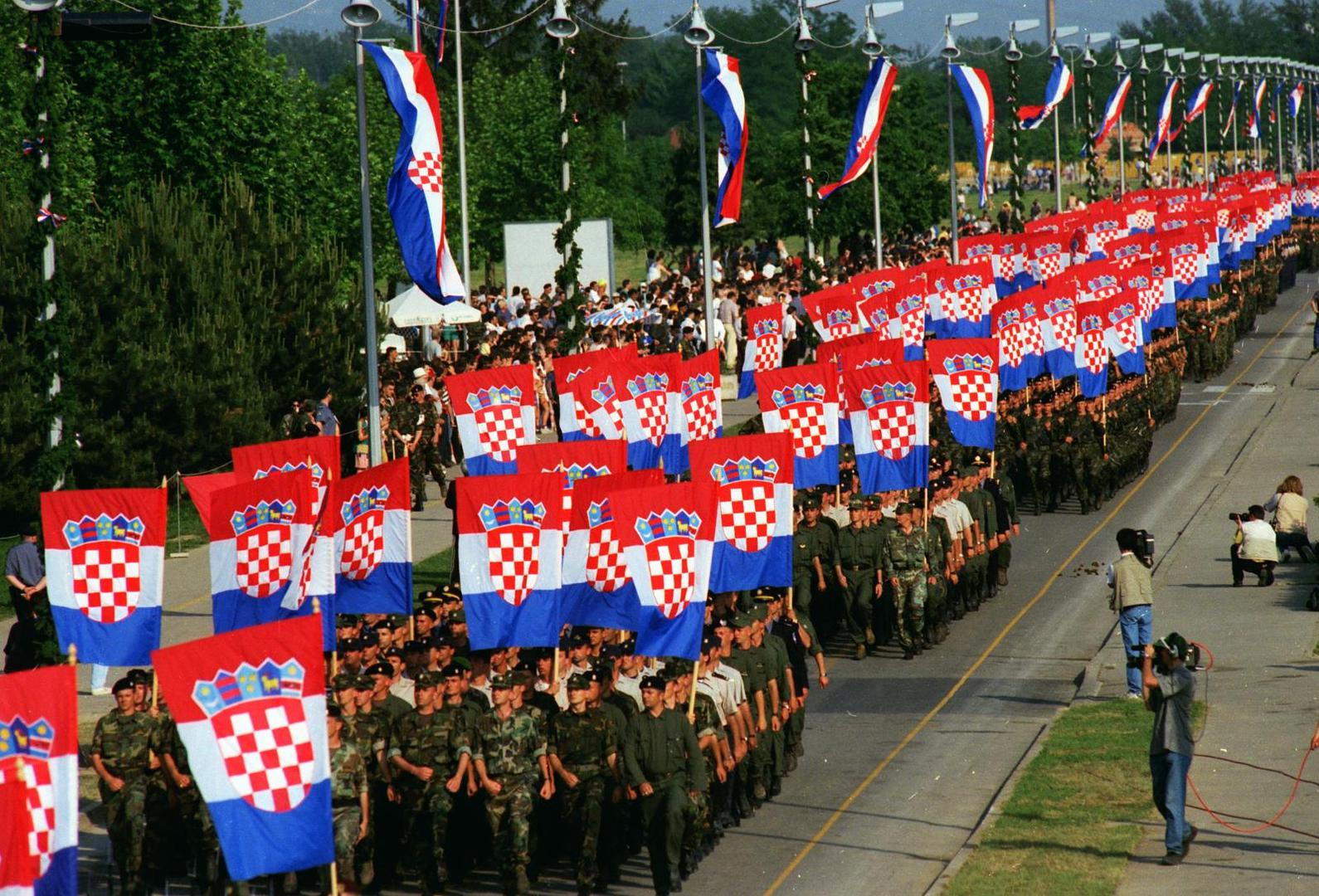
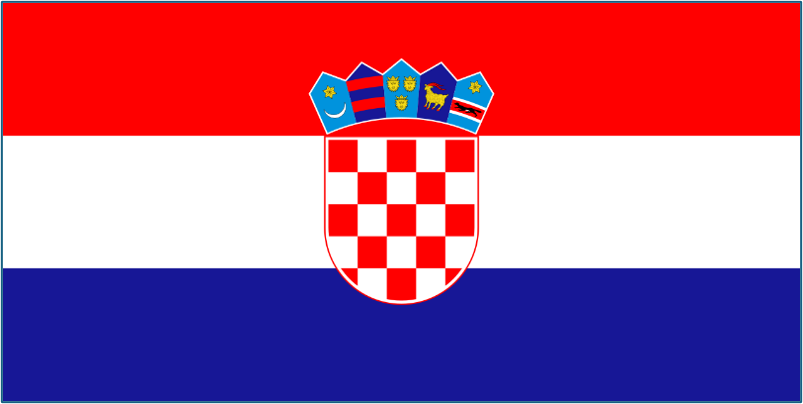
The Croatian flag is full of details that hide deep symbolism, reflecting the heritage and spirit of the country. The Croatian flag is one of the most important national symbols representing the identity and history of the Croatian people. Today’s flag consists of three equal horizontal stripes in the colours of red, white and blue, with the coat of arms located in the centre. The coat of arms is a shield of red and white fields, crowned by five small Croatian historical coats of arms. Understanding the origin and development of the Croatian flag and the meaning of its heraldic elements is crucial to understanding Croatia’s cultural and political heritage.
The History of the Croatian National Flag
The history of the Croatian national flag begins with the royal coronation flag, which became the flag symbol of the Croatian king and the Kingdom. One of the most important historical sources of this tradition is given to us during the coronation of King Dmitar Zvonimir. During the coronation in the basilica of St. In 1075 (or 1076), Pope Gregory VII: through the envoy (legate) Gebizon, handed over the symbols of royal honor, which include the flag:
“… I, Demetrius, who also call myself Zvonimir, by the grace of God, the prince of Croatia and Dalmatia… A king has been introduced and appointed, by you, Mr. Gebizon, an envoy of our lord Pope Gregory elected by the authority of the Apostolic See, I will rule by means of a flag, a sword, a sceptre and a crown…”
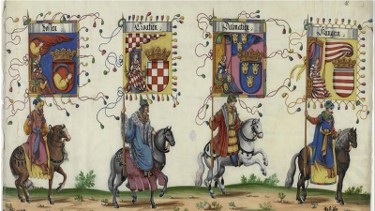
From those early days of medieval history, we can trace the flag and flag tradition of the coronations of Croatian kings. From this tradition, the first form of the state flag developed, namely the Croatian royal coronation flag. The oldest preserved depictions are coats of arms that accompany titles from the time of the Arpadović and Anjou dynasties. The earliest depiction of the Croatian flag is associated with Emperor Maximilian I of Habsburg (1493-1519) as an illustration of the Triumphal Procession (German. “Triumphzug”). Although he was not a Hungarian-Croatian ruler, but as the successor of Emperor Frederick III (1440-1493), he aspired to the Hungarian-Croatian throne, as evidenced by his campaign against Hungary in 1490. Among the lands to which Maximilian claimed are decorative depictions of the flags of Hungary, Dalmatia, Croatia and Bosnia (“Hungarn, Dalmatien, Croatien, Bossen“). All rectangular flags feature the Queen on the throne in clothes decorated with coat of arms symbols and with a sceptre in her hand, a triangular national flag with the coat of arms and a coat of arms shield crowned with a crown.
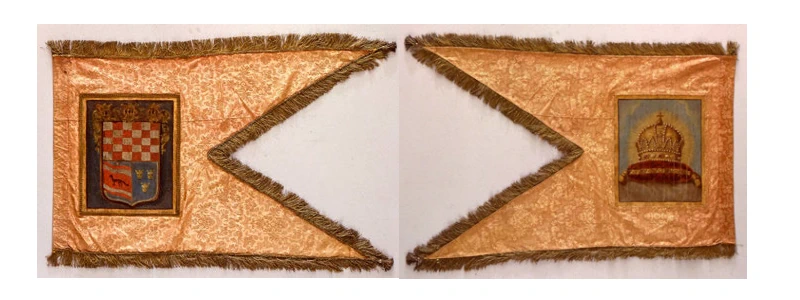
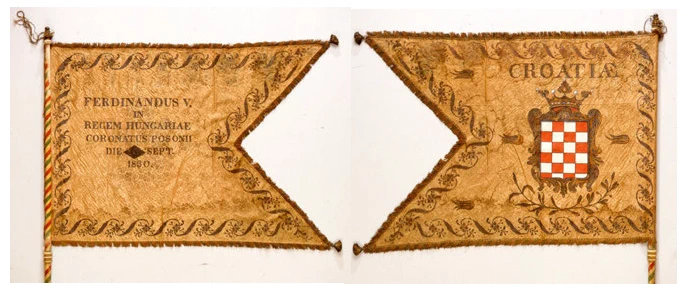
The oldest detailed preserved depiction of a coronation flag dates to the coronation of King Ferdinand II of Habsburg in 1618. The oldest existing Croatian state flag dates from 1647 as part of the coronation of Ferdinand IV, which is still preserved today in the Esterhazy Castle in Austria..
The Ban’s flag
In addition to the royal and coronation flags, the flags of the royal Ban also appear as symbols of the Ban’s authority. Within the Kingdom of Croatia itself, the Ban’s flag became the main state flag. From the early appearances in the late Renaissance and early Baroque periods, we begin to divide flags into two types. The first is the Ban’s standard (i.e. the flag), and the second is the crown flags for the Ban’s enthronement. As the Viceroy’s enthronement and honor was that of the viceroy (i.e. the first representative of the king and the kingdom), his enthronement was extremely solemn. The ban carried his flag, which traditionally carried on one side the coats of arms of the Kingdom of Croatia, Slavonia and Dalmatia, and separate crown flags of these kingdoms carried by dignitaries representing the crowns at the very enthronement as a sign of authority over the lands of the Ban’s administration. The oldest depiction of the Ban’s flag is from 1620 for Ban Count Toma II (Bakač) Erdedi, while the flag of the Ban’s crowns from 1708. The oldest preserved flag is from 1670 during the enthronement of Ban Nikola III Erdedi is still kept in the possession of the Archdiocese of Zagreb. This tradition also had one interesting thing, all the Ban flags were red until Ban Josip and Count Jelačić, who in 1848 introduced the first Tricolour, which would also be worn by Ban Josip Baron Šokečević during his enthronement in 1861. Both of these flags are still preserved in the possession of the Croatian History Museum in Zagreb. The last Ban enthronement and thus the Ban Banner was introduced during the enthronement of Baron Levin Rauch in 1869, which is still preserved today and is located in the Zagreb City Museum.
History of the Croatian Tricolour
The first use of the tricolours in Croatia occurred during the reign of Queen Maria Theresa, who introduced it at the founding of the Severin County (Comitatus Szeverinensis) in 1776. The introduction of the Croatian Tricolour began in 1848 during the Croatian National Revival, as depicted on the lithograph of the May Slavic barricade in Vienna, carried by Derutin Kušlan. The tricolours became a symbol of the struggle for autonomy within the Habsburg Monarchy. The choice of these three colours would go on to become one of the most presented at the Slavic Congress in Prague in June the following year.
Ban Jelačić and the institutionalisation of the Croatian tricolour on June 5
The Croatian-Hungarian War of 1848 and the defense of the fundamental rights of the Croatian people under the leadership of the most beloved Ban Josip Jelačić imposed, among other things, the need to create a single national flag. Striving to make the Croatian national flag state-forming and acceptable to all historical provinces, the political factors of the nation gathered around Ban Jelačić decided to take the colours of the Croatian flag from the basic colours of all three coats of arms of the Croatian Kingdom.
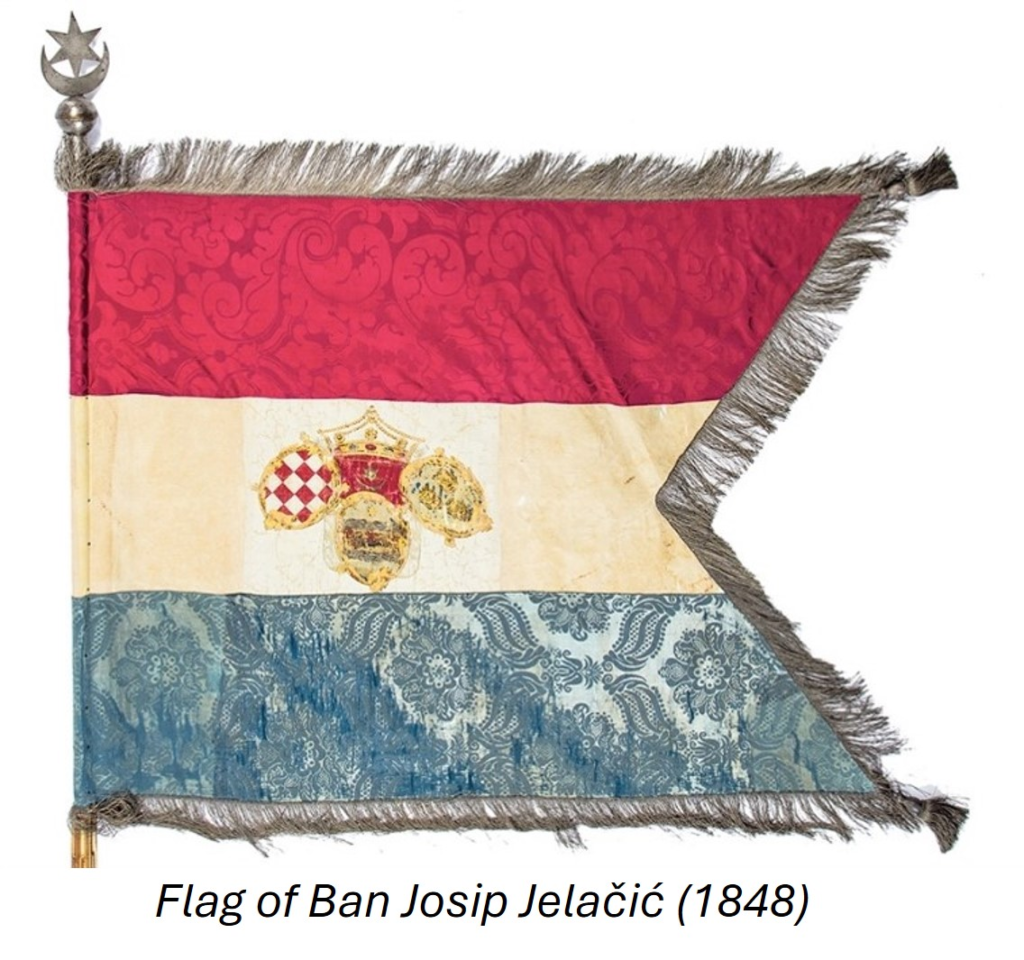
On June 4, 1848, Ban Jelačić and the National Guard in a ceremonial military procession entered Zagreb on horseback, greeted by representatives of the city and the newly appointed members of the government (Ban’s Council) that had just been formed on April 27, a week after his appointment as Ban. The procession was greeted with Croatian tricolours and showed the new direction of the then revival Croatia. The next day, June 5, on St. Catherine’s Square. In front of the church of the same name, the ancient act of enthronement began. Ban Jelačić sat on the Ban’s throne, taking over the symbols of royal – ban power, the flag and the sceptre. For the first time, the centuries-old tradition of red flags was replaced by the red-white-blue. This Croatian tricolour flag bore on one side the united coat of arms of the Triune Kingdom of Croatia, Slavonia and Dalmatia with the coat of arms of Great Illyria, while on the other the family coat of arms of the Jelačić family. Upon receiving these symbols, he took a solemn oath where he swore to defend and serve the Triune God, Our Lady and all the saints before the estates of the people and the land of Croatia, then he was raised three times by the chair in the air with shouts of glory and approval.
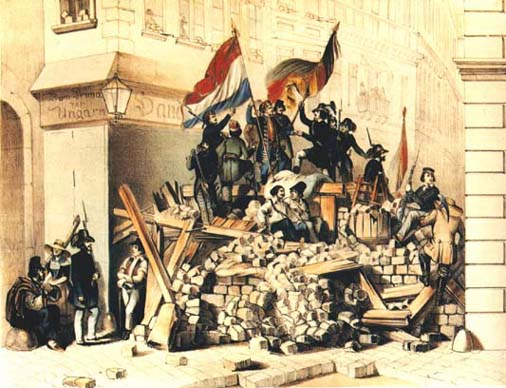
The memory of the second oldest use of the Croatian flag has also been preserved from 1848. We can see it proudly erected on the Slavic barricade in Vienna, where Croatian academic youth studied (above).
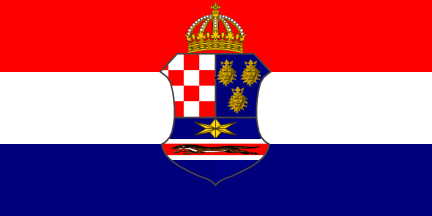
Flag of the Triune Kingdom of Croatia, Slavonia and Dalmatia (1848)
Legal Regulation of the flag
After the introduction of the Croatian tricolour, some time passed until the first regulations of the flag. With the collapse of the Hungarian Revolution in 1849. Franz Joseph, as the ruler of the then Habsburg Monarchy, decided to restrain national movements in the countries of the Monarchy, and ruled absolutistically. He also banned the use of national flags. Therefore, on September 10, 1852, the use of the Croatian tricolour was banned. The flags of certain countries of the Monarchy, the so-called bi-colours (landesfarben) of each country was to be used. This meant that the Croatian and Slavonian flags were allowed to continue to be used.

Due to the growing rebellion of the Hungarians and other peoples of the Monarchy, Franz Joseph was forced to abolish absolutism in 1860 and reintroduce certain changes. At that time, he allowed the use of the Croatian tricolour and other national flags in the countries of the Monarchy.
After the death of Ban Jelačić in 1859 and the subsequent appointment and enthronement of Baron Josip Šokčević, the Croatian flag was legally confirmed. He reintroduced it as his Ban’s flag, and for the first time the flag was clearly regulated by law. Later, his successor, Baron Levin Rauch, would reject the tricolour for the Ban’s flag, but continued to use the tricolour as the official flag,
A year after the Austro-Hungarian Compromise, the Croatian-Hungarian Compromise was concluded in 1868. According to this settlement, the kingdoms of Croatia and Slavonia preserved a certain degree of political autonomy towards the Kingdom of Hungary and the Hungarians, and these two kingdoms had the right to their own official language (Croatian) as well as the right to their flags and coats of arms, to their ban and parliament. In accordance with the Settlement, the Triune Kingdom of Croatia, Slavonia and Dalmatia received its flag and coat of arms. The red-white-blue flag had the coat of arms of the Triune Kingdom in the middle. The coat of arms consisted of three joined coats of arms (Croatian, Dalmatian and Slavonia) above which was the royal crown. Such a flag and coat of arms of the Triune Kingdom would last until the collapse of the Austro-Hungarian Empire in 1918.
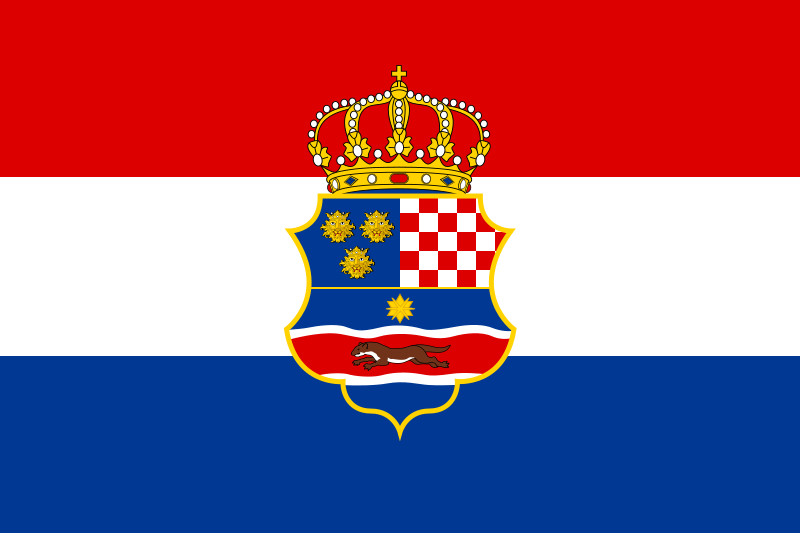
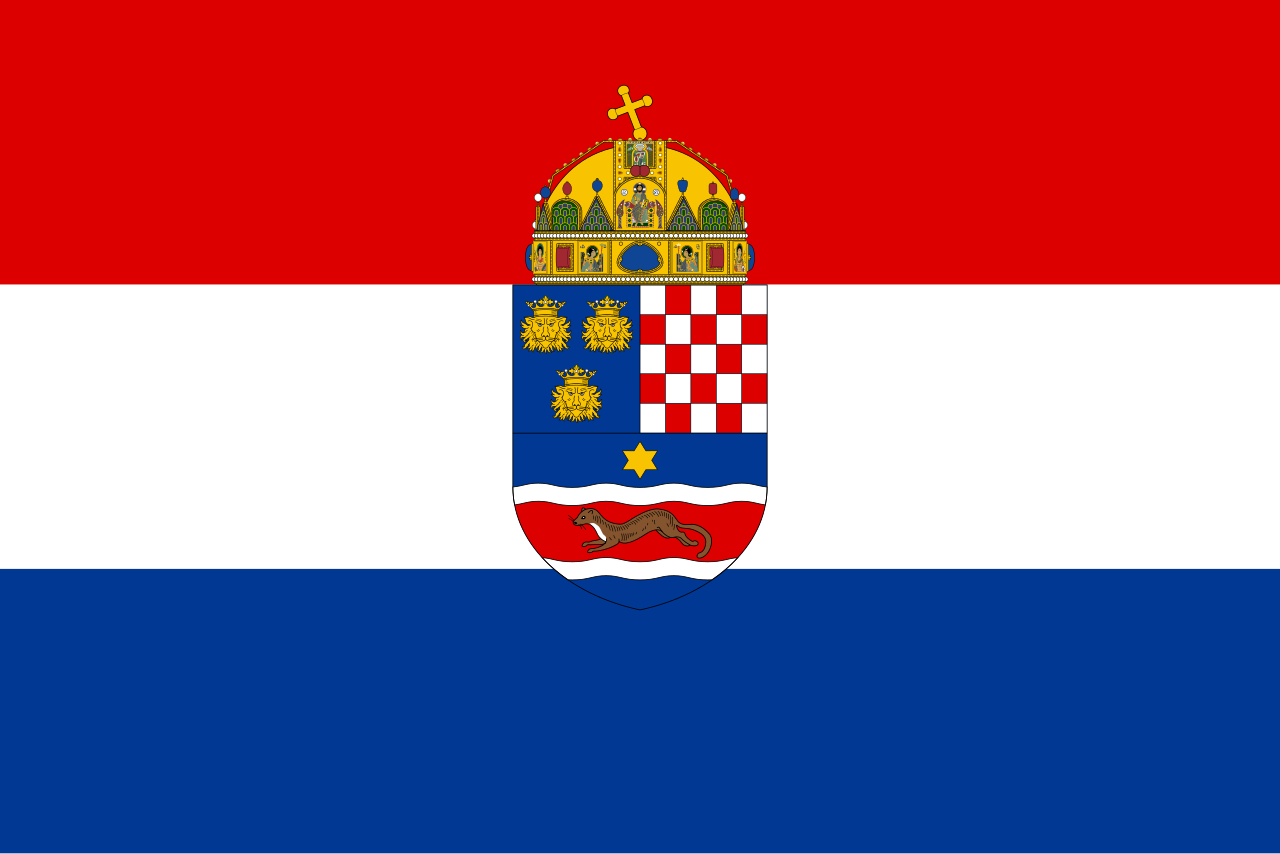
From the Croatian-Hungarian Compromise pf 1868, the Croatian tricolour flag has expressed Croatian political individuality. Together with the Croatian coat of arms, it was joined by the anthem “Our Beautiful Homeland” from 1891. Further regulations in law of the Croatian Tricolour flag were adopted in 1876, 1899 and 1914, when the descriptions of the crowned coat of arms of the Triune Kingdom of Croatia appeared in addition to the mention of red, white and blue.
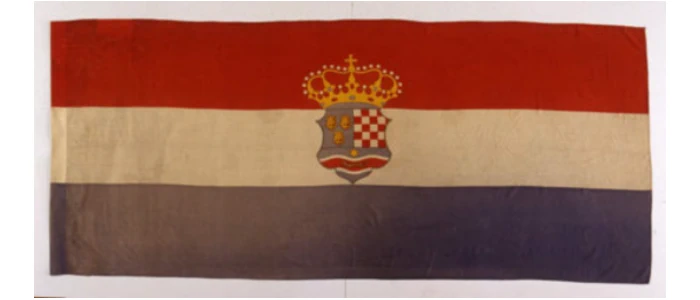
During the Austro-Hungarian Monarchy from 1867 to 1918, Croatia was part of the Triune Kingdom of Croatia, Slavonia and Dalmatia. At that time, a flag with three colours was used, but without the coat of arms, because Austria limited the use of national symbols.
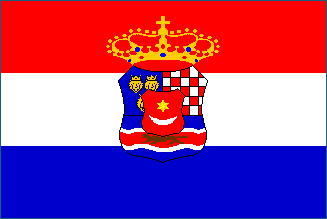
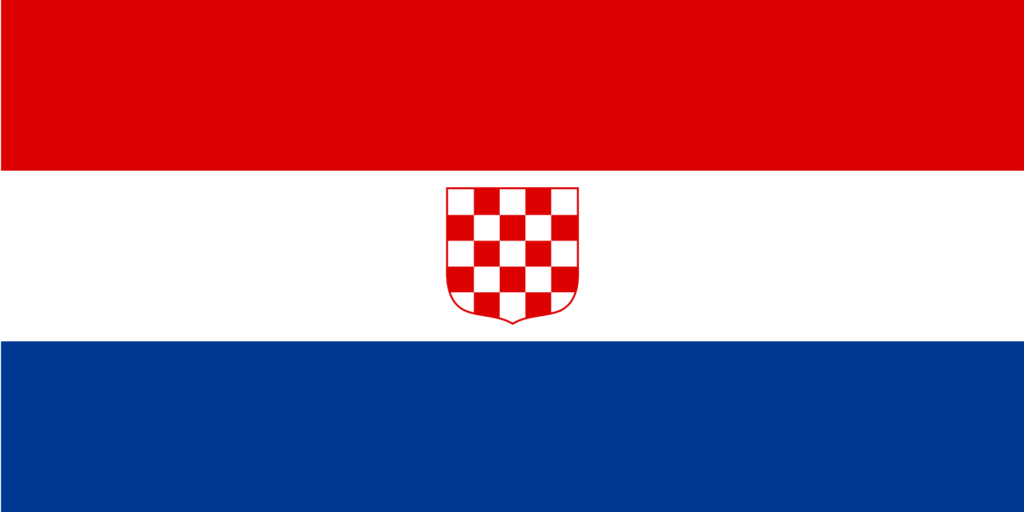
The Rakovica Rebellion from 8 to 11 October 1871, led by Eugen Kvaternik (1825-1871), was the first attempt to create a modern national state of Croats. Although it failed, it had a great influence on later history. Reconstruction of the flag based on modern seals and description. It is not known whether such a flag was actually made.
After the First World War , the state of Serbs, Croats and Slovenes was created from the South Slavic countries of the disintegrating Dual Monarchy – Slovenia, Croatia and Bosnia and Herzegovina. The National Assembly in Zagreb adopted the national flag, but in less than a month it was illegally integrated into the Kingdom of Serbia, which by then had already united Montenegro, creating what would later be known as Yugoslavia. This kingdom adopted as the former state’s flag, but with the reverse arrangement of colours.
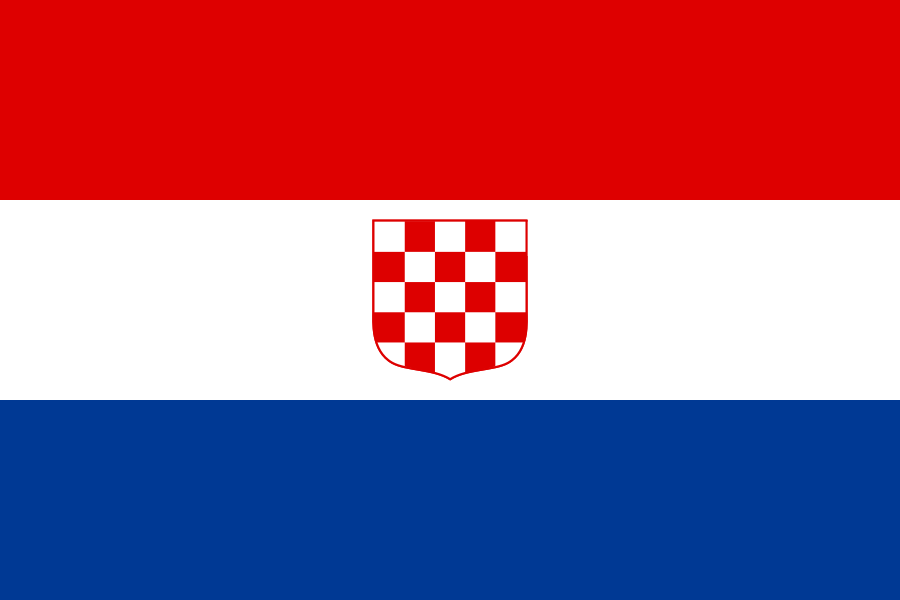
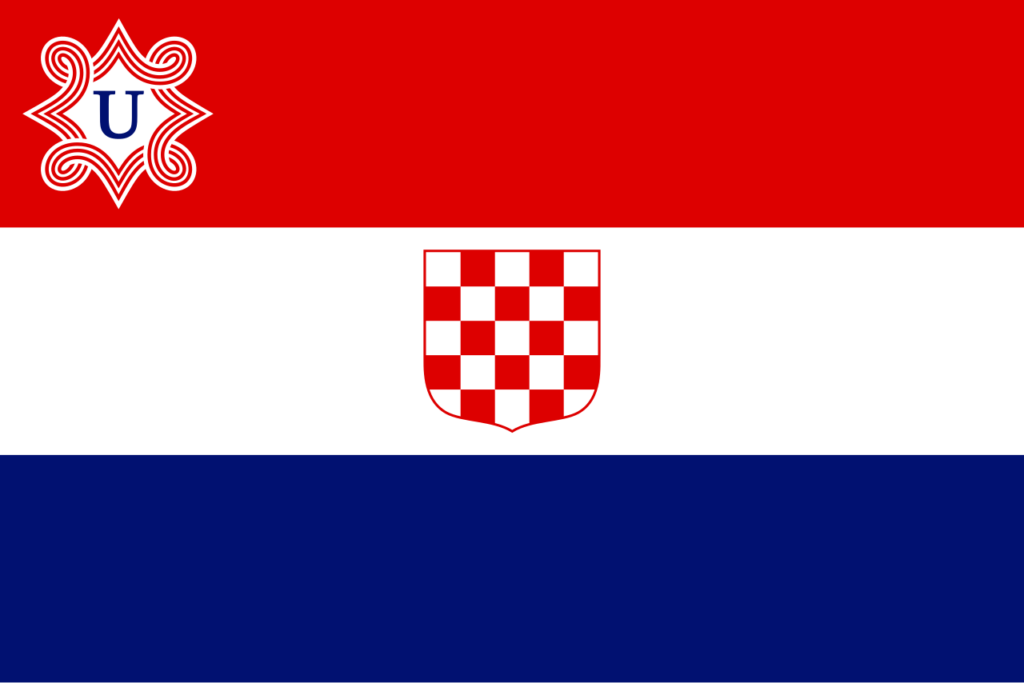
When Croatia formed the Banovina of Croatia in 1939 as part of the Kingdom of Serbs, Croats and Slovenes, it used its own flag. The civil flag of the Banovina of Croatia was the standard Croatian tricolour (red-white-blue), while the state flag of the Banovina of Croatia contained the tricolour and the Croatian ancient coat of arms. During World War II, the Independent State of Croatia retained the historic Croatian tricolour flag with the ancient coat of arms.
When the multi-party system was reintroduced in Croatia, and after the first elections, the socialist attribute was removed from the name of the Republic, and constitutional changes on June 26, 1990, removed the red five-pointed star from the flag, and in its place was placed the historical Croatian coat of arms of 25 red and white fields.
On 12 December 1990, the independent and internationally recognized Republic of Croatia determined by the Constitutional Law that its flag consists of “three colours: red, white and blue with the coat of arms of the Republic of Croatia in the centre“, in the usual horizontal order of colours.
The current Croatian tricolour flag was designed by academic painter Miroslav Šutej. The Croatian coat of arms was designed by the same author, as a shield with five smaller shields in the crown. From left to right, it contains the oldest known Croatian coat of arms, and the coat of arms of the Republic of Dubrovnik, Dalmatia, Istria and Slavonia.
The symbolism of the Red White and Blue
These three colours did not emerge as a pale copy of either Slavic ideas that were later taken over by Pan-Slavic and Russian movements, it was created as a Croatian response to our cultural revival. These three colours represent the three primary colours of our Kingdoms. At that time, three Croatian crowns under the Habsburg sceptre, which in 1848 demanded and received unity under the Croatian Ban, a wish that has been heraldically represented since the time of Ban Tomo Erdedi, and whose title dates back to the Middle Ages. In fact, these three Croatian colours are a living symbol of the meaning of the word triune, because all three colours make one body, one flag, just as the three crowns made one Croatia. This is how red describes the blood spilled for the freedom of our country and people, a reminder that Croatia is the Antemurale Christianitatis (bulwark of Christianity) that paid for its freedom with blood, which other eastern neighbouring countries do not have. White has a double symbol: the first is the peace and prosperity that our country enjoys in its freedom, and the third is geographically natural, which depicts our plains as the source of this prosperity. The third colour is blue and it is known for our Adriatic Sea, the sea that defined us as a maritime people and culture, this colour is also a sign of nobility carried by the once celebrated nation of noble Croats.
We wish all Croats a happy Croatian Flag Day!
Bog i Hrvati